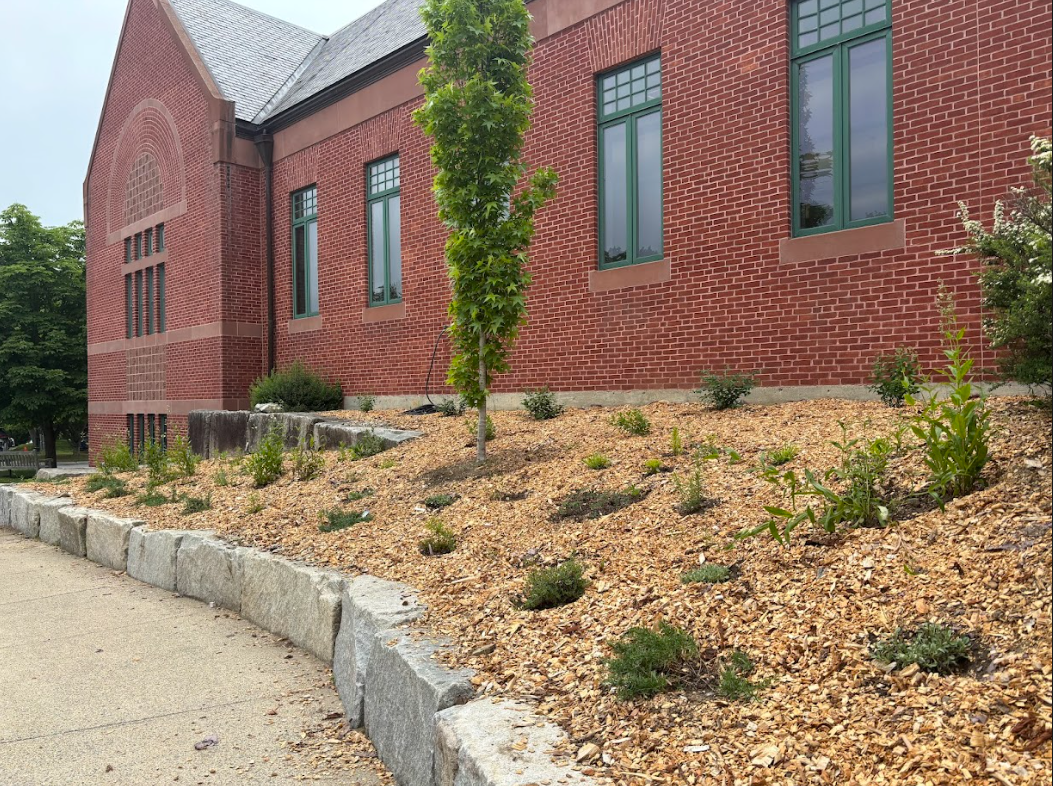
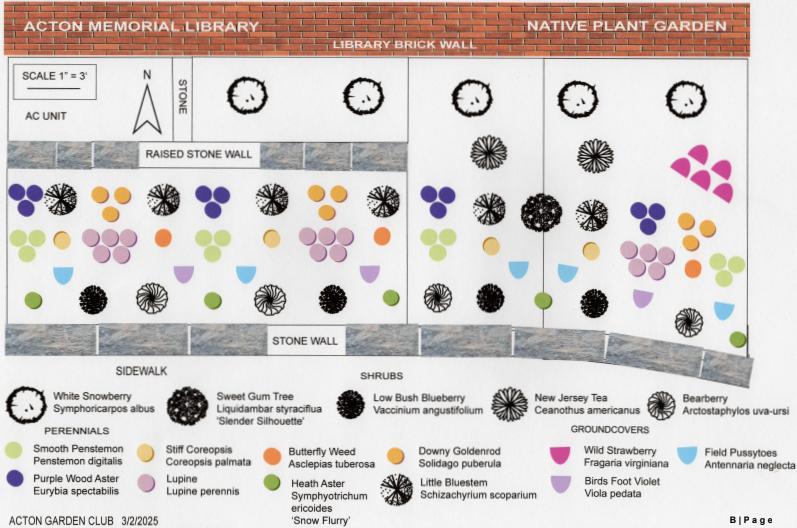
The Wilde Garden was named for William Wilde, the original benefactor of the Acton Memorial Library in 1890. This garden was established to showcase the use of native plants as sustainable land management on a small scale. Though this plot is very dry and steeply graded, the native plants help to prevent erosion and improve water retention to the garden as a whole.
The plants and arrangement were chosen by a committee of library staff and trustees, Conservation Department staff, and members of the Acton Garden Club. The committee was able to put together a list of plants that met three major goals for the garden:
utilize native plants to support local wildlife and naturally manage erosion;
include edible species that would have been used by indigenous peoples and colonists;
be relatively low maintenance for library staff and volunteers.
This garden, though a small plot, provides so many benefits to our community. In addition to the sustainable benefits, it also serves as an educational tool for library patrons to learn more about indigenous foods, native wildlife, and sustainable planting practices. It also serves as an outlet for Community Art Projects that can be installed into the garden and enjoyed by all. Seeds are also harvested and made available in the Seed Library at the West Acton Citizen’s Library.
This garden could not have been established without the help of the Trustees of the Acton Memorial Library, the Acton Garden Club, the Acton Conservation Department, and the Acton Department of Public Works. We also thank our wonderful volunteers who help us in maintaining the garden from year to year.
Check out the details about the plants showcased in the Wilde Garden below!
Spring Blooms
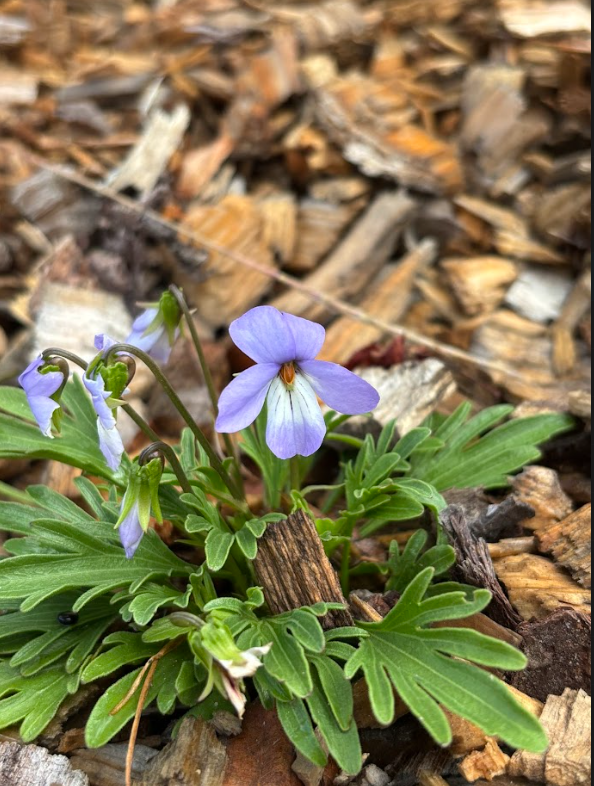
Bird’s Foot Violet
Bird’s Foot Violet (Viola pedata) is usually one of the first pops of color in the spring, but it’s early bloom time means that it’s not uncommon to see a second late season bloom. This flower is a host plant for several pollinators, especially several kinds of fritillary butterflies. It also has a deep root system that helps to improve aeration and reduce soil erosion.
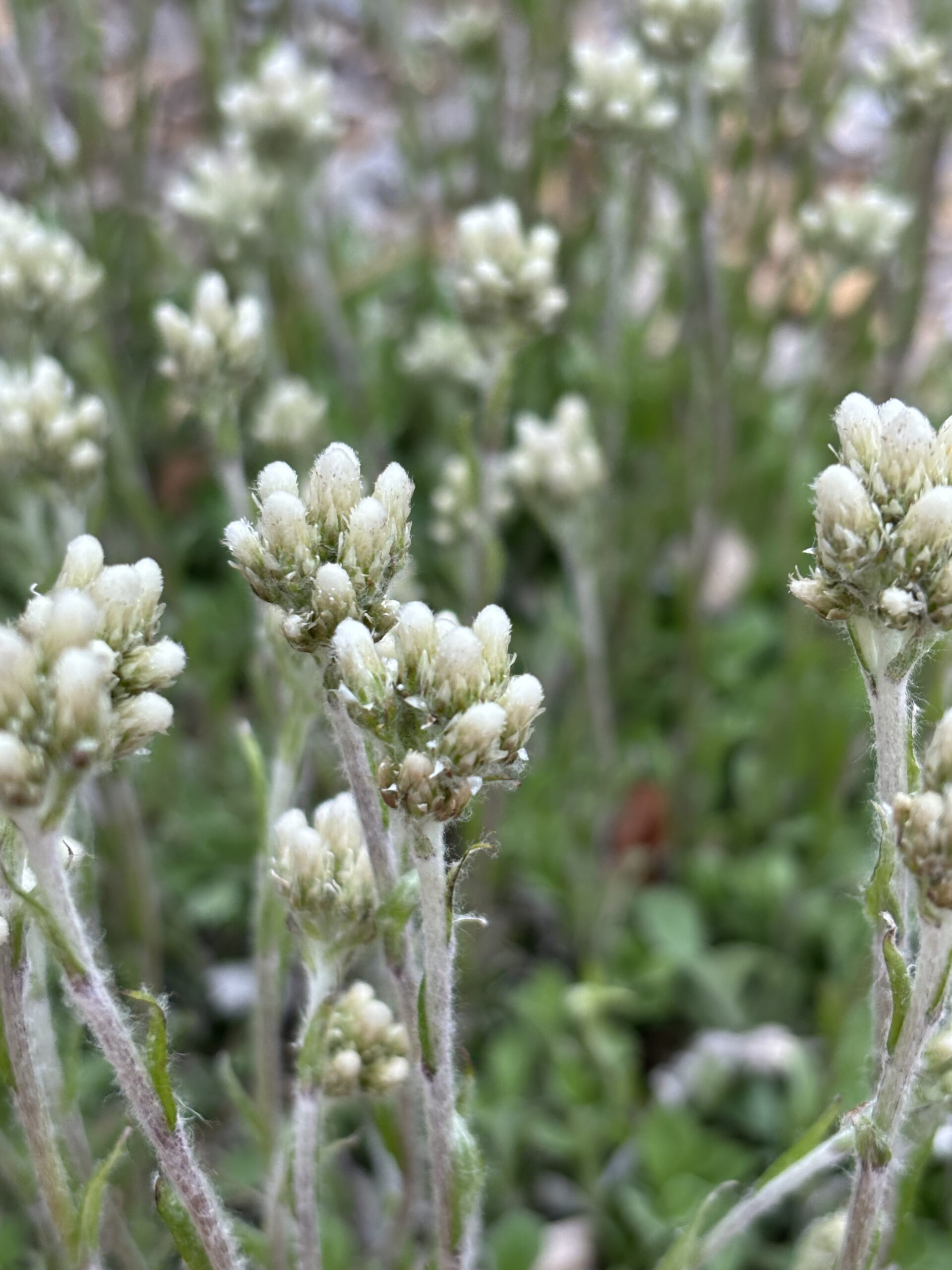
Field Pussytoes
Field Pussytoes (Antennaria neglecta) is a great groundcover plant, even for areas with light foot traffic. It is drought tolerant and it’s bloom clusters look like little cat’s paws sticking out from the ground. This adorable plant provides necessary food for native bees and butterflies and is also a crucial larval host plant for the American Lady butterfly.
Low Bush Blueberry
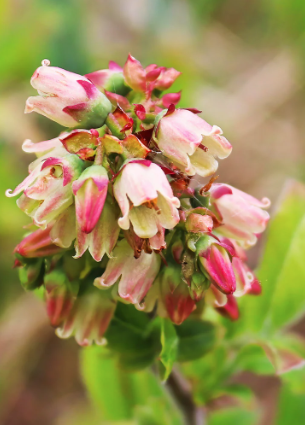
Lowbush blueberry (Vaccinium angustifolium) is another extremely beneficial edible native. This plant provides much need early spring food for many native bees and is a host plant for the Brown Elfin butterfly. The dense foliage provides shelter and nesting place for many species and its spread out root system also helps with erosion control. Much like the wild strawberry, its fruit will also help to feed native birds and other wildlife in the summer.
Bearberry
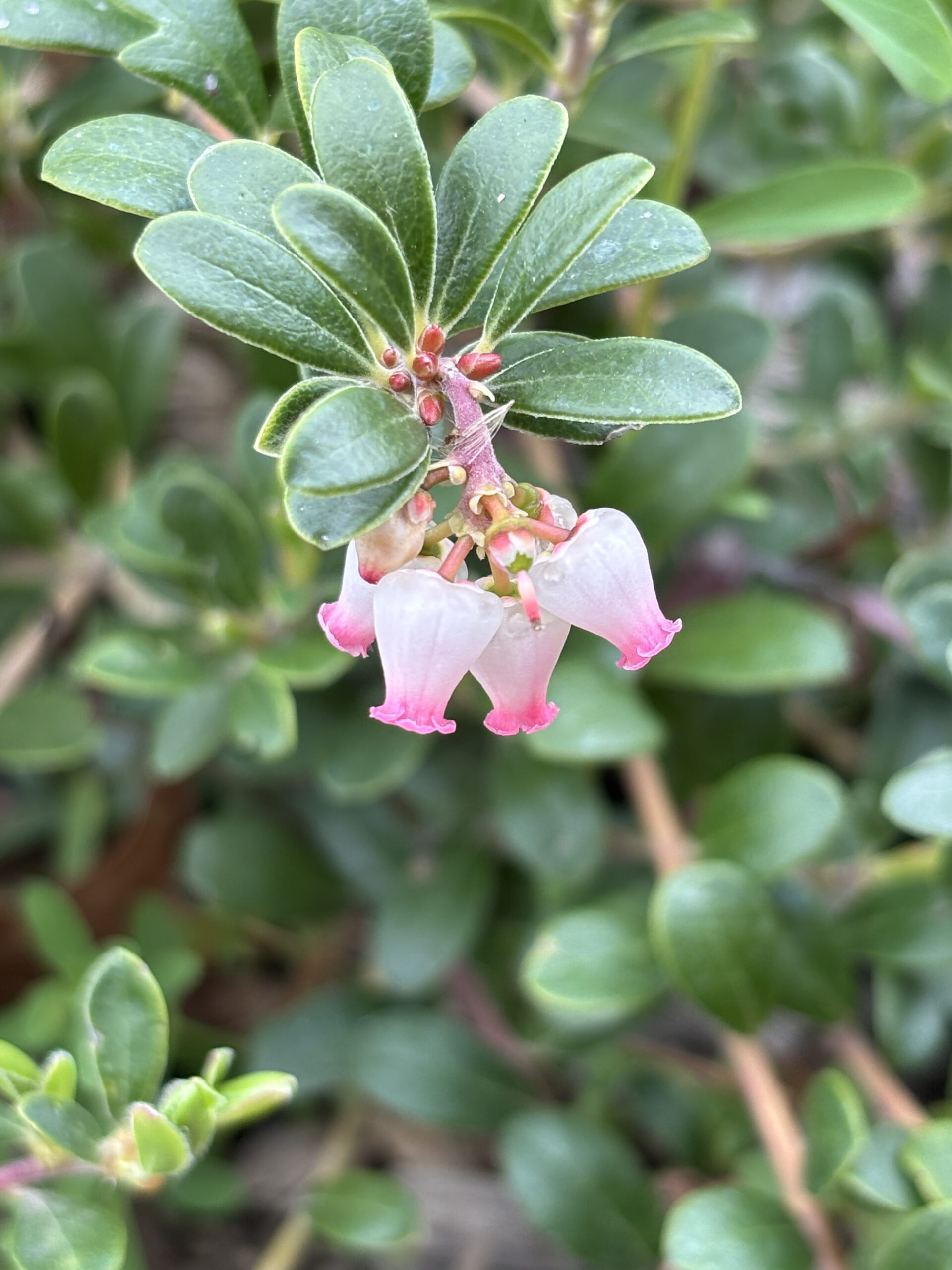
Bearberry (Arctostaphylos uva-ursi) is a ground cover plant whose roots help to prevent erosion. Its flowers also provide nectar and food for many pollinators and it is a larval host plant for fourteen different species of caterpillars. The bright red berries it produces are also a food source for native birds and mammals in the summer and fall.
Summer Blooms
White Snowberry
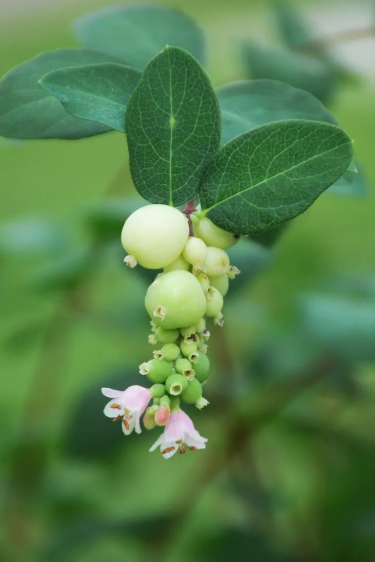
White snowberry (Symphoricarpos albus) helps to provide much needed shelter and nesting space for all sorts of wildlife. It’s small pink flowers provide nectar for pollinators and hummingbirds and the snow white berries that it is named for provide food for native mammals and birds throughout the fall and winter.
New Jersey Tea
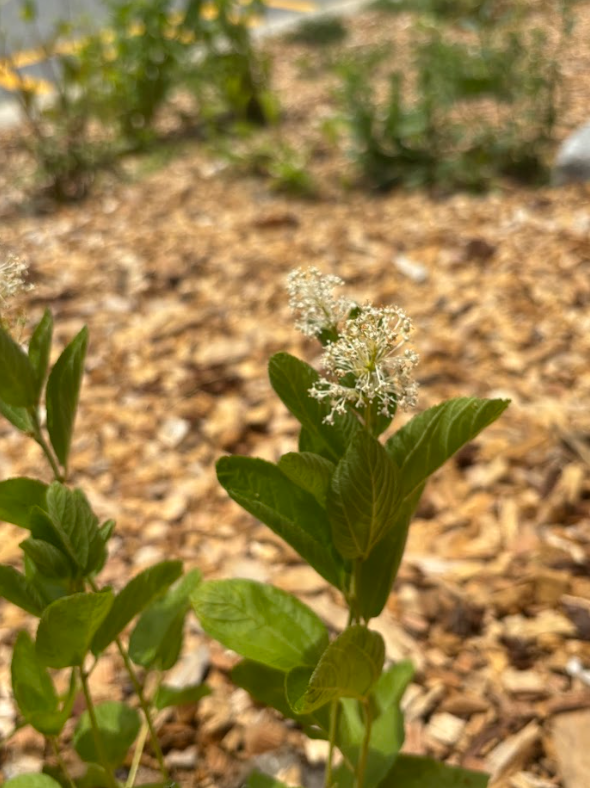
New Jersey Tea (Ceanothus americanus) is a great shrub for sunny slopes as its deep root systems help to stabilize and prevent soil erosion and also make it very drought resistant. It is also a larval host plant for the Red Banded Hairstreak butterfly and provides food and shelter for a variety of native pollinators. it received its common name during the time before the Revolutionary War, when colonists would brew its leaves into a tea alternative during the boycott of British tea.
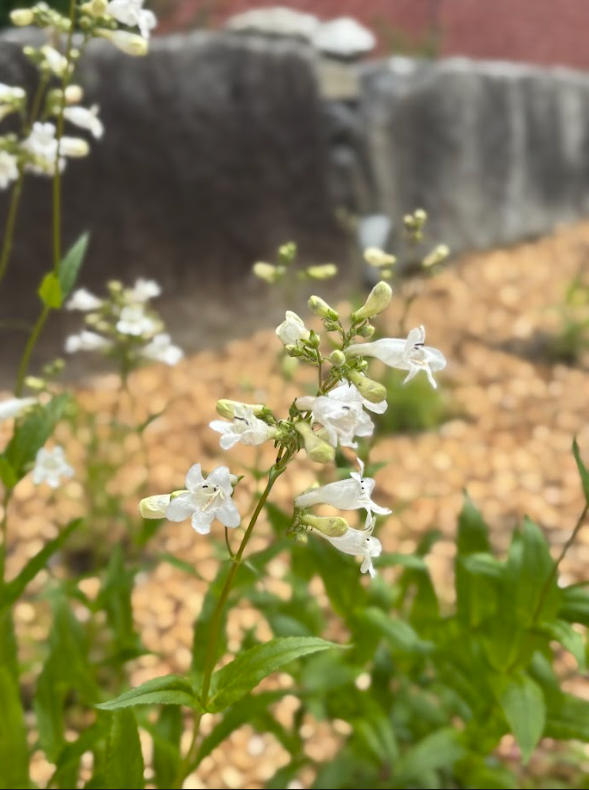
Foxglove Beardtongue
Foxglove Beardtongue (penstemon digitalis) has thin flowers and sweet nectar that are great at attracting long-tongued bee populations, which are struggling in the Northeast, as well as hummingbirds! They are also one of the host plants for the Common Buckeye Butterfly and various Checkerspot Butterflies.
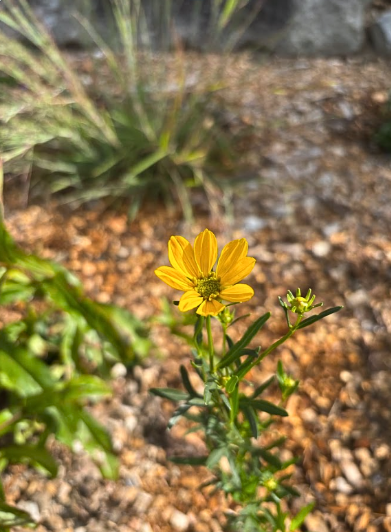
Stiff Coreopsis
Stiff Coreopsis (Coreopsis palmata) is nectar rich and provides food for many different species of pollinators, including butterflies and bees. Other larvae also feed on the flower head. In addition, it grows in a mat like pattern, which helps to reduce soil erosion and provide habitat for many different native species as it continues to grow.
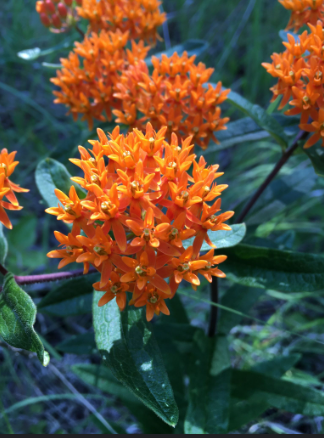
Butterfly Milkweed
Butterfly Milkeed (Asclepias tuberosa) is a pollinator powerhouse, attracting all sorts of pollinators as well as hummingbirds. In addition, Monarch larvae feed on their leaves, making them an important host plant for Monarch butterflies to lay their eggs. This showy plant isn’t only host to Monarchs though! It also provides necessary nutrition for the Gray Hairstreak Butterfly and the Queens Butterfly. Historically, its roots were used by First Nations peoples for a variety of medicinal purposes.
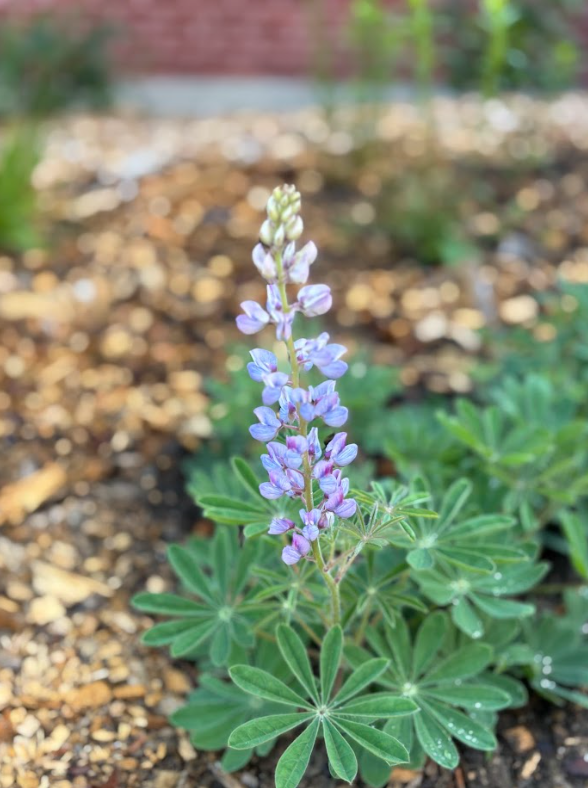
Lupine
Lupine (Lupine perennis) is actually a legume, providing much needed nitrogen fixation into the soil, helping to build a healthy foundation for wildlife in the garden. Its flowers provide nectar and food for local wildlife in the early summer. This gorgeous plant has had its habitat destroyed in many places and it is considered imperiled in the state of Massachusetts.
Fall Blooms
Little Bluestem
Little Bluestem (Schizachyrium scoparium) is a native warm weather grass that is tolerant of summer heat and drought. The foliage provides habitat and food for native wildlife and its deep root system helps to control erosion and improve water retention in the soil. While it doesn’t have flowers, the grass turns a lovely reddish color in the fall, lending some additional color to the garden.
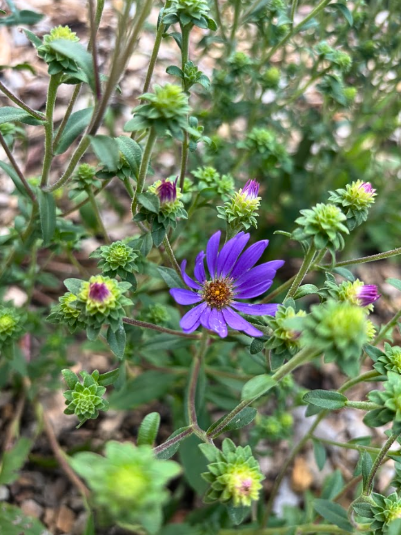
Purple Wood Aster
Purple Wood Aster (Eurybia spectabilis) is a host plant for several pollinators, including the Pearl Crescent Butterfly, the Gorgone Checkerspot Butterfly, and the Wavy Lined Emerald Moth. In addition, they provide nectar for hummingbirds late in the season before they start their migration. These pollinator powerhouses are also deer and rabbit resistant.
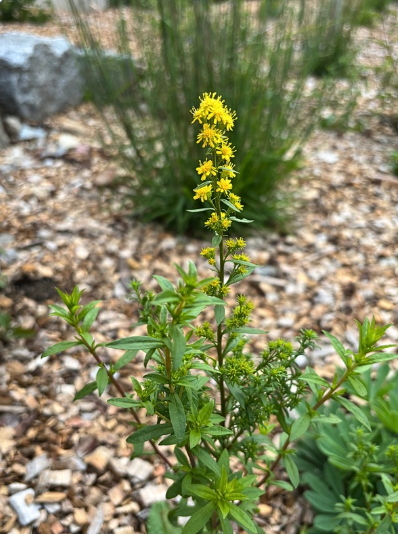
Downy Goldenrod
Downy Goldenrod (Solidago puberula) is blooming now! This vibrant plant supports many pollinators including approximately 35 different pollen specialist bees, whose larvae can only survive with access to certain pollens. While they often get blamed for seasonal allergies, the real culprit is usually ragweed, which blooms at the same time but is often overlooked!
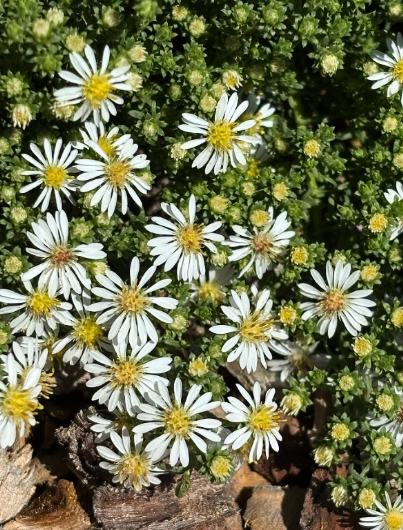
Heath Aster
Heath Aster (Symphyotricum ericoides) is an additional source of late season food for our pollinators, blooming as other flowers are beginning to fade. It is very drought tolerant and thrives in disturbed soils, helping to bind the soil and prevent erosion. The foliage grows in a dense mat that provides habitat for wildlife and it is a host plant for the Banded Woolly Bear caterpillar.